
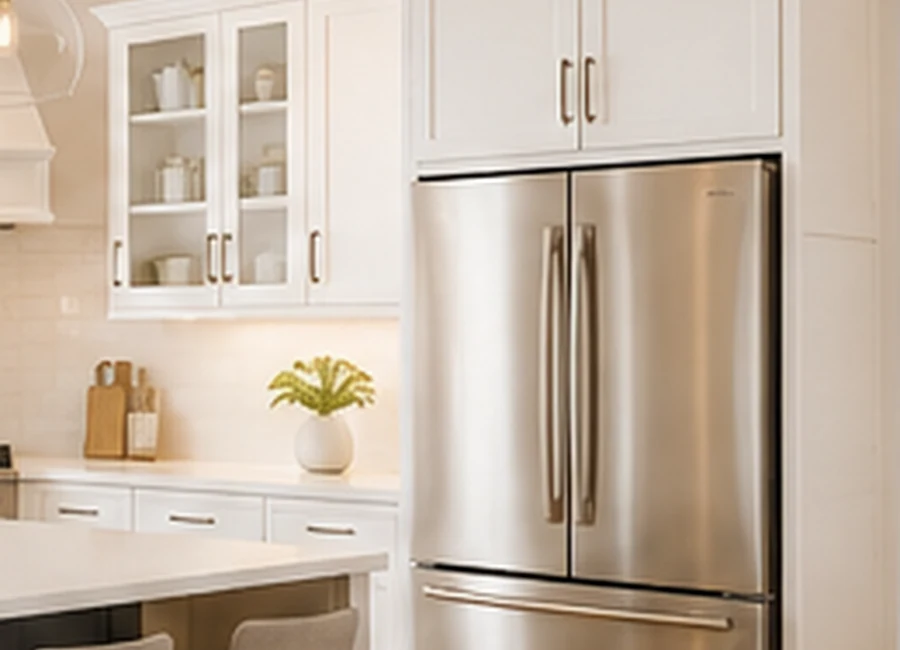
Confirm exact models early enough to avoid conflicts.
“Standard size” is not precise enough for coordinated construction. Refrigerator depth, hinge clearance, range or cooktop dimensions, hood requirements, dishwasher panel details, wall-oven openings, microwave location, and small-appliance storage should be checked against the current manufacturer information for the exact model.
Planning checklist:
Manufacturer and model number
Product dimensions
Required clearances
Door and drawer swings
Electrical, gas, water, and drainage needs
Ventilation and ducting requirements
Countertop and cabinet cutouts
Panel-ready specifications
Delivery path
Installation responsibility
Warranty and service access
Separate appliance selection from appliance installation responsibility.
The website may describe planning and coordination, but it must not imply that every appliance connection or installation is automatically included. The written proposal must identify which appliances are owner-supplied, who receives and inspects them, who installs them, and which qualified trades are required.
Frequently Asked Questions
Do I need to buy appliances before design begins?
Final models may not be required on the first day, but reliable dimensions and requirements are needed before cabinets, utilities, and openings are finalized.
Can I keep my existing appliances?
Existing appliances can be considered when model information, dimensions, condition, and project fit are available.
Do you sell appliances?
Do not claim appliance sales. The approved service is appliance planning; any purchasing or installation responsibility must be confirmed separately.
Why does ventilation matter?
Cooking equipment can have specific ventilation and clearance requirements. These must be coordinated with the layout, cabinets, ceiling or wall conditions, and applicable codes.