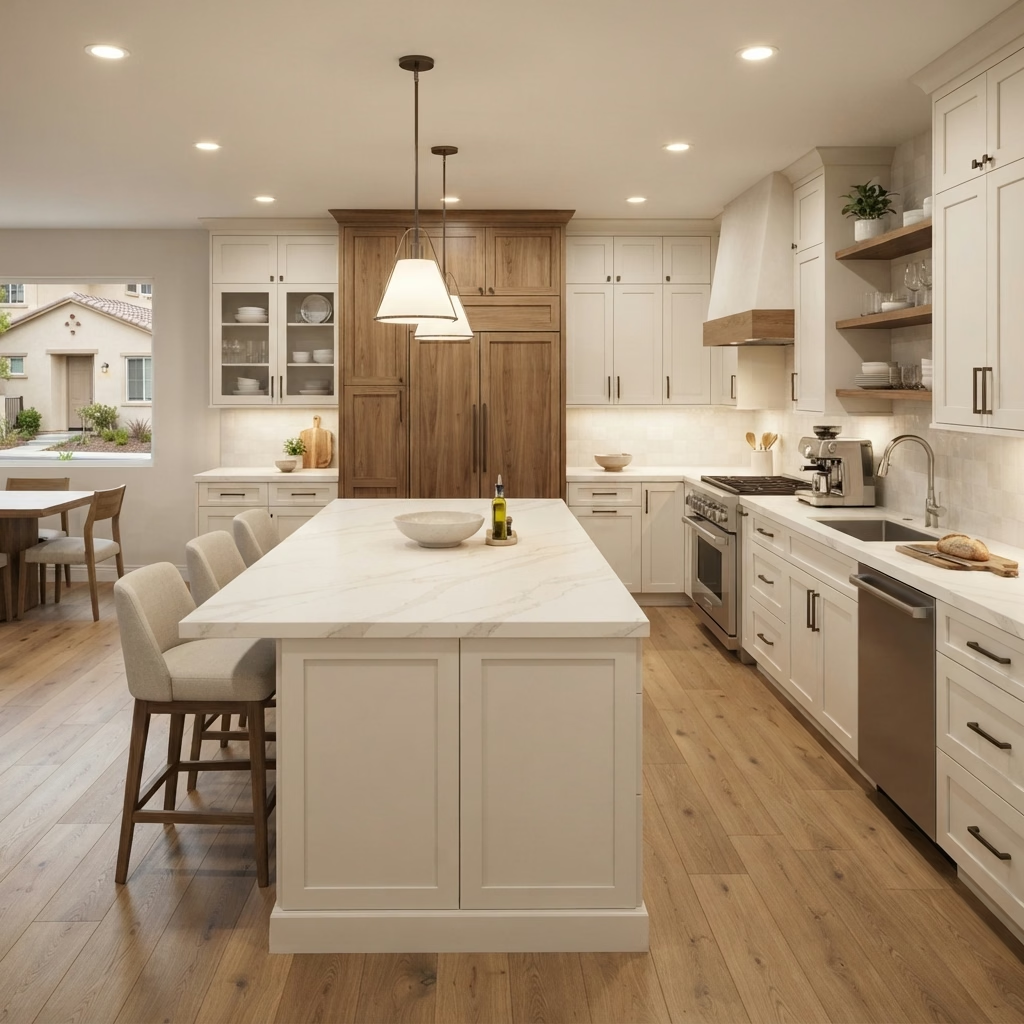
Kitchen remodel costs in San Diego County can range from $10,000–$25,000 for cosmetic updates to $60,000–$150,000+ for high-end renovations. Explore estimated prices by kitchen size, project scope, and materials to plan a realistic budget for your home.
Kitchen Remodeling Cost EstimatesThe prices shown are estimated ranges for kitchen remodeling projects in San Diego County. Actual costs vary based on kitchen size, materials, labor, existing conditions, and project scope. Request a personalized written estimate for pricing specific to your home.
Kitchen Remodel Cost By Project Tier
Not every kitchen renovation requires a complete redesign. Some homeowners want to refresh an outdated appearance, while others need new cabinetry, improved storage, or a different floor plan. The level of renovation generally has a greater effect on total cost than appearance alone.
Cosmetic Refresh
$10,000 – $25,000
A cosmetic refresh improves the appearance of an existing kitchen without significantly changing its layout. Common updates include cabinet painting or refacing, new hardware, countertop replacement, backsplash installation, and selected finishing improvements.
This approach may be suitable when the cabinet boxes, plumbing connections, and overall layout remain functional. Retaining usable components can reduce demolition and installation requirements.
Mid-Range Remodel
$28,000 – $55,000
A mid-range renovation typically involves replacing several major kitchen components while preserving the general footprint. Improvements may include new cabinetry, countertops, flooring, lighting, and appliances.
Homeowners can also address insufficient storage, worn surfaces, and inefficient work areas. Material selections and the amount of electrical or plumbing work determine where a project falls within the estimated range.
High-End / Luxury Remodel
$60,000 – $150,000+
Luxury remodeling projects may include custom cabinetry, premium stone surfaces, specialized storage, high-performance appliances, and substantial layout changes.
Removing walls, relocating utilities, or modifying structural components can introduce additional engineering, permitting, and construction requirements. These projects generally involve more design coordination and a broader scope of work.
Estimated Cost By Kitchen Size
Kitchen square footage affects the quantity of materials and installation labor required. Larger kitchens often need more cabinets, countertop surfaces, flooring, and lighting fixtures.
However, a compact kitchen with custom features and extensive utility relocation may cost more than a larger kitchen using standard materials and an unchanged layout.
Kitchen Size Pricing
Kitchen Size
Estimated Cost
Under 100 sq ft
$15,000 – $35,000
100–200 sq ft
$28,000 – $65,000
200–300 sq ft
$45,000 – $95,000
300+ sq ft (open concept)
$70,000 – $150,000+
Why Two Similar-Sized Kitchens Can Have Different Costs
Consider two kitchens measuring approximately 150 square feet. One homeowner replaces cabinets, countertops, and flooring while retaining the original appliance locations. Another chooses custom cabinets, moves the sink, adds an island, and upgrades electrical connections.
Although the rooms are similar in size, the second project involves additional materials, skilled trades, and coordination.
Use square footage as a starting point rather than the sole basis for estimating your renovation.
Estimated Cost By Kitchen Service
Homeowners who are not planning a complete renovation may prefer to upgrade individual components. The following ranges illustrate the estimated cost of common kitchen improvements.
These figures are intended for preliminary budgeting. The precise installation scope, preparation requirements, and selected products may increase or decrease individual costs.
Avoid double-counting: If a complete remodeling estimate already includes cabinets, countertops, and flooring, do not add these individual service prices to the total again.
Also, confirm whether appliance purchases, material removal, delivery, and additional electrical work are included in the quoted amount.
What Factors Affect Kitchen Remodeling Costs In San Diego County?
Understanding the largest cost drivers helps homeowners distinguish necessary improvements from optional upgrades. Two renovation plans can look similar in photographs yet require significantly different construction work.
Cabinet Construction And Material Quality
Cabinetry can represent a substantial portion of the remodeling budget. Stock cabinets use standardized sizes, semi-custom options provide more design flexibility, and fully custom cabinets are manufactured around specific requirements.
Construction quality, finish selection, drawers, hinges, and internal storage accessories also affect pricing.
Existing cabinets that remain structurally sound may be candidates for painting or refacing, potentially reducing replacement expenses.
Countertops And Finishing Materials
Countertop pricing depends on material selection, surface area, fabrication complexity, edge treatments, and installation requirements.
Laminate, quartz, granite, and natural marble have different price points and maintenance needs. Additional features such as waterfall edges, extensive cutouts, or intricate backsplash patterns can increase labor requirements.
Consider durability and everyday maintenance alongside appearance.
Plumbing, Electrical, And Layout Changes
Moving a sink, dishwasher, range, or refrigerator can require modifications to plumbing, electrical, or gas connections.
Removing walls or expanding an opening may introduce structural work, design review, and permit requirements.
Keeping existing connections in their original positions can simplify construction when the current layout already meets your needs.
Hidden Conditions And Labor Requirements
Older homes may contain uneven floors, deteriorated plumbing, outdated wiring, water damage, or other concealed problems.
Some issues become visible only after cabinets, flooring, or wall finishes are removed. Repairing them can change the original scope.
Specialized installation, limited site access, and complex finishing details can also influence labor costs.
How To Plan A Realistic Kitchen Remodeling Budget
A useful renovation budget begins with the improvements your household needs most, rather than selecting every preferred feature at once.
Identify Essential And Optional Improvements
Separate functional needs from design preferences. Damaged cabinetry, inadequate storage, unreliable lighting, or deteriorated surfaces may deserve priority.
Decorative fixtures, premium hardware, and specialty finishes can be evaluated after essential costs are understood.
This approach makes it easier to adjust selections without compromising the main purpose of the renovation.
Prepare For Unexpected Expenses
Consider setting aside approximately 10–20% of your planned construction budget as a contingency, adjusting the amount for property age and project complexity. For example, on a $40,000 planned remodel, a 15% reserve is $6,000, bringing the total planning allowance to $46,000. This reserve is not a fee or a prediction of extra charges; it provides a buffer if concealed water damage, electrical repairs, or agreed scope changes arise.
Compare The Complete Scope
Review whether each estimate includes demolition, materials, delivery, installation, disposal, permit-related work, and finishing.
A lower initial price may not represent better value if significant tasks are excluded. Consistent specifications make contractor proposals easier to compare.
Cabinet Refacing Vs. Replacement: Which Option Offers Better Value?
Cabinet refacing and replacement serve different purposes. Choosing the right approach depends on cabinet condition, storage requirements, and the desired kitchen layout.
When Cabinet Refacing Makes Sense
Refacing may be appropriate when existing cabinet boxes are solid, properly aligned, and arranged in a functional layout.
The process generally replaces or refinishes visible surfaces while preserving the cabinet structure. This can reduce the need for extensive removal and new cabinet fabrication.
However, refacing does not resolve inadequate cabinet dimensions or serious structural deterioration.
When Complete Replacement Makes More Sense
Replacement may be necessary when cabinets have water damage, unstable construction, poor storage configurations, or an unsuitable layout.
New cabinetry provides greater flexibility for changing dimensions, improving accessibility, and incorporating specialized storage solutions.
The better long-term choice depends on the condition and functionality of the existing cabinets, not merely the lowest upfront price.
How To Reduce Kitchen Remodeling Costs Without Sacrificing Quality
Controlling renovation expenses often involves thoughtful planning rather than selecting the cheapest available products.
Preserve Functional Parts Of The Existing Layout
Keeping walls, plumbing locations, and major appliance connections unchanged may reduce demolition and utility modifications.
Before redesigning the entire kitchen, determine whether improved cabinet organization, work surfaces, or lighting could solve the main problems.
Select Materials For Practical Performance
Durable mid-range products can provide excellent functionality without the expense of highly customized finishes.
Compare maintenance requirements, moisture resistance, cleaning needs, and expected wear. Materials that fit your household’s daily habits may provide better overall value.
Finalize Decisions Before Construction
Late changes to appliance sizes, cabinet specifications, countertop materials, or electrical locations may cause rework and scheduling delays.
Selecting major products early allows the contractor to develop a clearer scope and coordinate installation requirements.
What Should A Kitchen Remodeling Estimate Include?
A detailed written estimate helps homeowners understand what they are purchasing and reduces uncertainty when comparing contractors.
It should identify the proposed work, material specifications, labor responsibilities, and important exclusions.
Materials, Labor, And Project Scope
Look for clear descriptions of cabinetry, countertop materials, flooring products, fixtures, and installation tasks.
If certain finishes have not been selected, ask whether the estimate includes allowances and how differences in final material prices will be handled.
Permits, Cleanup, And Additional Work
Before approving a kitchen remodeling estimate, confirm who is responsible for permits, inspections, demolition debris, and final cleanup. Your written agreement should also explain material specifications, payment terms, and how additional work will be approved.
Permits and scheduling can affect the overall budget, particularly when a renovation involves more than replacing surface finishes.
When Might A Kitchen Remodel Require Permits?
Permit requirements depend on your kitchen remodeling plans and the jurisdiction where your home is located. Electrical, plumbing, mechanical, or structural modifications may require permits and inspections, while certain cosmetic improvements may be exempt.
Homeowners can review the City of San Diego's kitchen remodeling permit guidance to understand applicable requirements. Other San Diego County cities may have different permitting procedures, so confirm the rules with your local building department before starting construction.
What Can Affect The Remodeling Timeline?
The schedule depends on project scope, material availability, inspections, and the number of trades involved.
Cabinet manufacturing, countertop fabrication, and specialty product delivery can create lead times. Plumbing and electrical work may also need to be completed before finishes are installed.
A realistic project schedule should explain the main construction stages and account for possible changes resulting from concealed conditions or delayed materials.
Make an informed decision
Is A Kitchen Remodel Worth The Investment?
A kitchen renovation can improve daily comfort, storage, workflow, and the overall condition of your home.
Understand The Financial Value
However, the financial value of a remodel depends on the property, neighborhood, quality of work, and amount invested. Expensive custom features do not automatically produce equivalent resale value.
01 / Resale priorities
Planning To Sell?
Homeowners planning to sell may prefer broadly appealing finishes and functional improvements.
Broad appealPractical upgradesFunctional layout
02 / Long-term living
Planning To Stay?
Those intending to remain in their homes for many years may place greater value on personalized storage, accessibility, and everyday convenience.
Personalized storageAccessibilityDaily comfort
The takeaway
Evaluate both the practical benefits and the total project expense before deciding how extensively to renovate.
Get An Exact Quote For Your Kitchen
These are estimates. Book a free in-home consultation and we'll give you a real, itemized number for your San Diego County kitchen.
Planning a kitchen upgrade? Tell us about your project and explore remodeling options, estimated costs, and the next steps for your San Diego home.
Free, no-obligation estimate
Kitchen Remodel Cost Questions
No. The listed amounts are estimated planning ranges rather than guaranteed prices. Actual costs depend on kitchen dimensions, selected products, existing conditions, and the required construction work. A written estimate based on your project provides more specific pricing.
Custom cabinetry, premium materials, structural modifications, and relocating plumbing or electrical connections can substantially increase costs. Concealed damage and extensive preparation work may also affect the final budget.
Not automatically. Coastal location alone does not establish a higher remodeling price. Property conditions, accessibility, permitting requirements, material choices, and moisture-related repairs may influence individual projects. Compare quotes based on actual scope rather than ZIP code alone.
Have your kitchen evaluated using its measurements, existing condition, desired layout, and preferred materials. Request a written estimate that identifies the scope, labor, materials, exclusions, and assumptions affecting the quoted amount.
Yes, when existing cabinets remain structurally sound and the layout functions well. Painting, refacing, or replacing selected components may improve their appearance. Severely damaged or poorly configured cabinetry may require replacement instead.
Permit requirements depend on the jurisdiction and proposed work. Some cosmetic improvements may be exempt, while electrical, plumbing, mechanical, or structural changes may require approval. Confirm requirements with the appropriate local building department before construction.
A contingency of approximately 10–20% is a useful planning consideration for many renovation projects. The appropriate amount depends on home age, known conditions, and scope. This reserve helps address potential unforeseen work rather than representing a mandatory additional fee.
Often, retaining the layout reduces the need to relocate plumbing, electrical connections, and structural components. However, material quality and existing conditions still affect pricing. An unchanged layout does not guarantee a low-cost renovation.
Not necessarily. Some estimates cover appliance installation labor but exclude purchasing the appliances themselves. Ask whether delivery, installation accessories, utility connections, and removal of old appliances are included.
Completion time varies with project complexity, product availability, permitting, and construction requirements. Cosmetic updates typically involve fewer stages than renovations requiring custom cabinetry, structural work, and multiple inspections. A project-specific schedule is more reliable than a universal timeline.
A cosmetic refresh generally updates existing surfaces and finishes without major changes to the kitchen layout. A full remodel may replace cabinetry, flooring, countertops, and utilities, potentially involving structural modifications. The difference in scope explains much of the difference in cost.
Not based on price alone. Compare material specifications, included labor, permits, payment terms, exclusions, and warranty provisions. A detailed proposal from a properly licensed contractor can offer better clarity than a lower quote that leaves important work undefined.